Beyond the Bottom Line: Creating Measurable Impact
There may be errors in spelling, grammar, and accuracy in this machine-generated transcript.
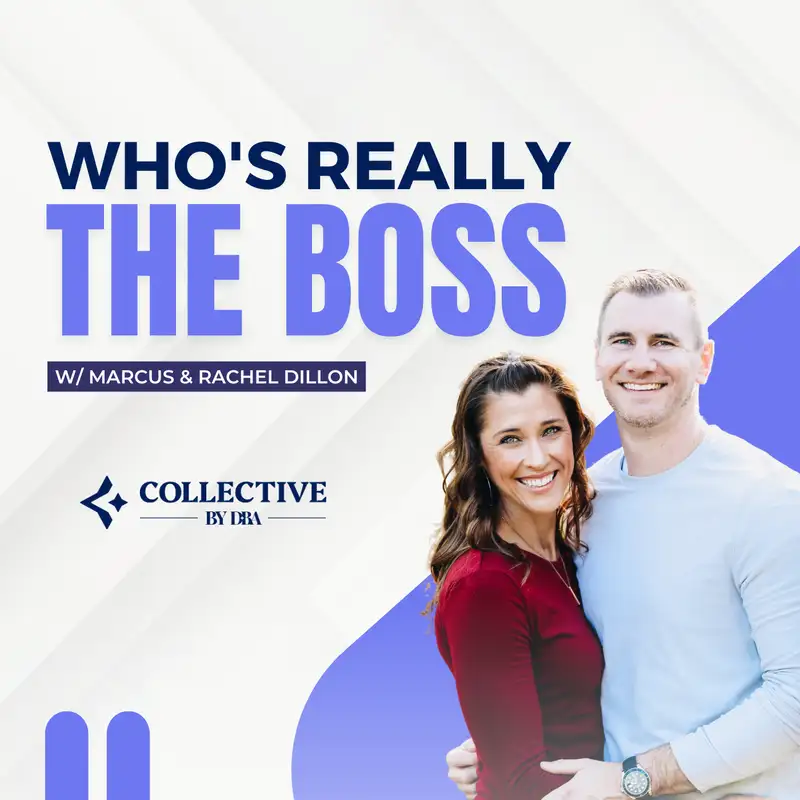
Rachel Dillon: Welcome to Who's Really the Boss podcast. I'm Rachel Dillon, and along with my husband, Marcus Dillon, we share the joys and challenges of leading a $3 million accounting firm together. From team structure to growth strategies, we share our leadership successes and failures so you can avoid the mistakes we have made and grow a valuable accounting firm. Welcome back to another episode [00:00:30] of Who's Really the Boss podcast.
Marcus Dillon: Hey, thanks for having me back.
Rachel Dillon: And this episode is releasing in the new year 2026. So if we haven't said it already, Happy New Year to everyone listening. Um, and we want to start the new year off big, but not necessarily with the same goal setting and habit formations and things that maybe every other podcast is focusing on right now. Um, but really setting the year [00:01:00] up to align with mission, vision and values for us specifically, which means we are looking at impact and how can we create the biggest impact and positive impact by that? Not not going through and blowing things up. Right. Um, but creating positive impact in our circles of influence with our team, with our clients, in our communities, um, and things like that. So I'm excited, Marcus, to hear, um, kind of where [00:01:30] this conversation will go related to even how we measure impact, which can feel more like a abstract idea versus something that's actually measurable.
Marcus Dillon: Yeah. I'm glad you you prefaced it with positive impact because, um, maybe, maybe I'm guilty, but some of the impact that I've created over the years is destructive, uh, or brings death. Uh, you know, so I think, uh, make sure that you're always [00:02:00] looking for positive impact and measure that if you're doing doing negative impact or destruction and death, probably, um, try something else. So, um, but yeah, as you mentioned, I'm sure a lot of podcasts right now are teaching you how to, um, you know, start the year off. Well, uh, we finished 20, 25 really well, and we celebrated that. I think there was a previous podcast where we just shared how we celebrated that with the team, um, how we measure that. [00:02:30] And as mentioned, like impacts one of those vague words, um, for us, it actually spells out our values. Um, so and it's also part of our 2026 rally cry, which is, uh, lead change, create impact. And so I guess we'll have to do a pretty good job to make sure that that impact is positive impact. Um, so but the all of this, you know, kind of goes back to that previous conversation where we as [00:03:00] as a team, both you and I as a team, the whole team DBA the leadership team as we lean into this concept of impact, um, you know, how we measure that, how we make sure that we are doing that on a daily basis? And, uh, what we started to brainstorm in different rooms that I'm a part of is how you give back, you know, as a Christian business owner and what that looks like. So we started to, uh, you know, dive into what it would look like, um, to really create lasting impact beyond ourselves. [00:03:30] And when we think about, you know, the, the future direction of DBA and that slide that we've talked about before, that last point on that slide, uh, you may have to help me out here with the exact words, but it did talk about giving back and doing that on both a local and international level. Correct.
Rachel Dillon: That's right. That's exactly what it said. Giving back on a local um, and abroad as a team [00:04:00] or as a firm. And so that was something. I mean, I'm sure this is the direction you're going that we had done on. I'll say a smaller scale and not super consistently. So we have in the past, as Dylan business Advisors, we have done some local community projects. When we went remote as a firm, we participated in the Operation Christmas Child, where we packed a shoebox [00:04:30] and it gets sent around the world with, um, Christmas gifts, but also with the gospel that goes out to lots of places. And so we have done that as a firm. But as far as taking specific dollars or specific organizations and setting aside days or funds for those types of things we hadn't ever really done in a strategic or a consistent basis that included and involved [00:05:00] the entire team. And so I think seeing that last kind of bullet point or that last area on our future direction and not really having a measurable, um, thing to check off like we did on all of the others, not being able to directly see how we were doing that on a consistent basis once a year is still great, but thinking about it and doing it is just going to create a much [00:05:30] bigger impact. If we're doing that consistently throughout the year and not just a one time event.
Marcus Dillon: Yeah. And so, um, and this whole conversation, I'll, you know, also disclaim like this isn't to boast or anything like that. We're just sharing, you know, what we did and how we determined we would be good stewards of all the things that we've been given and bring team into that measure of impact. So all of that, you know, to just share with listeners and those who may be interested, [00:06:00] you know, about what we did and maybe take a piece of that back to their own business or their family. So we were always, you know, generous at heart and continue to be and, you know, some of that happens at the family level and the individual level. But, you know, as a as a leadership team and, you know, as owners of the business, we started to put our heads together, both you and I like, how can we do this? How can we bring the team into, you know, more generous mindset and then ultimately having a great leadership team with you, me, Amy and Leslie [00:06:30] also having a very similar heart and a very similar mindset. It made all the sense in the world. Um, so we created, uh, the DBA Impact Fund. And so that Impact fund is a is an, an account, uh, with a donor advised fund. So National Christian Foundation, which we've done podcasts with Trey Little who runs NCF at the uh, Houston office. But NCF is a legit standalone, donor advised fund. It's based out of Atlanta. They do good [00:07:00] work all over the world. Um, so we wanted to partner in this. We didn't want to control or set up a bank account on our own behalf to, you know, achieve really that future direction point. Uh, bullet point that really hadn't been achieved yet.
Marcus Dillon: So throughout 2025, we were really investigating, praying, trying to figure out the right way to fulfill that future direction. And so we created the DBA Impact Fund in 2025. And so it's just a small step. Uh, so [00:07:30] we created the fund. And then we determined as a leadership team and then shared that with the whole team, that beginning in 2025 and moving forward, will actually contribute 1% of every dollar that comes into DBA and collective into that DBA impact fund to go to organizations, people, things around the world that are beyond ourselves. And so it's really easy to measure. Um, obviously revenue, uh, is something that as accountants, we can calculate pretty easily 1%. [00:08:00] You can do the math on that pretty easy. If you're even the most basic of accountants like I am. So we're starting at 1%. We're committed to that, um, for now and going into the future. And so that was just the small step that we did and that that's the way that we can measure it. Um, the cool thing about that is, you know, there's a statement, it's a standalone account. So we can share that and be transparent and visible with the team. Um, so that's just that's the first step [00:08:30] forward that we took to achieve that future direction bullet point that had kind of been staring us in the face for years, you know, how do you achieve this? How do you measure it? Um, so that DBA Impact Fund was introduced at the year end team retreat. And I think I think it went over well. I think a lot of the team members are also generous in nature and kind of felt that much more connected to why we're doing it and, you know, the future direction of DBA.
Rachel Dillon: Yeah. I want [00:09:00] to ask you a few questions related to just maybe the logistics of the donor advised fund, how we landed on doing that. Um, you, Aaron Neutze, our director of tax and financial Planning, and myself, we just did a webinar on year end tax planning strategies and mentioned donor advised funds. So, um, not that this will be new to anyone listening to this, but just [00:09:30] how did you land on doing a donor advised fund over anything else?
Marcus Dillon: Yeah. Um, so with a donor advised fund, once the dollars go into that fund, they are, uh, a part of that donor advised fund organization. So in this case, NCF, uh, you can't get that money back out. You can't repurpose it. It is truly to be used for charitable purposes goes to approved charities only. Um, so we wanted that control mechanism in place as opposed to [00:10:00] just setting up an additional bank account that, you know, we could redistribute, we could transfer money back in. So we wanted a little bit more control to make sure that, hey, this is what we are committed to. Um, and so with that, the the 1% is easy to calculate. You know, we look at the invoice revenue, not even collections. Um, so the invoice revenue for the previous month, we make that deposit, uh, 1% of that goes into the fund that first week [00:10:30] of the next month. And then that money is there, uh, with a donor advised fund. It can also be invested, it can earn interest. It can just earn investment dollars while it sits and builds. For maybe you have a big charitable event in mind, um, like part of what we're going to use the fund for which we'll speak about here in a bit. But then there's also, um, there's also it's just like a checking account. So you can also just dole out money to charities throughout the year because you have been making, you know, in our example, [00:11:00] these monthly deposits.
Marcus Dillon: So when we created the account in midyear 2025, we actually did a bigger deposit to kind of make us, uh, true up, uh, the 2025 invoices to date. Uh, so we started with a chunk of money, and then we started the monthly deposit thereafter. And, you know, going into the beginning of 2026, we have a, you know, a good base of dollars to start with. Uh, to use in the way that we're going to, um, starting in 2026 [00:11:30] and beyond. That way, it wasn't like we were advancing monies that weren't there. So there's a variety of different ways you can contribute stock. You can contribute other assets into a DAF. We're just doing straight, you know, cash, um, from the operating account because that's all DBA has. Dba doesn't have stock investments or crypto or anything like that. We just have, uh, you know, the, the dollars, so to speak. So but that's that's why we chose the DAF. We chose NCF as an [00:12:00] organization because we've got connections there. We we believe in their values and the people behind that brand. And we know that within NCF, there's going to be a whole host of charities that are going to be much better off, uh, for our measly 1% compared to, you know, just going to maybe some non vetted, uh, organizations.
Rachel Dillon: Yeah, I like that. Um, to really maximize. Right. Yes. There is a tax advantage which allows [00:12:30] us to maximize every dollar that's available than to go out beyond, uh, Dylan business advisors and beyond, um, our team, our family. The other part that I like about the way we have structured, uh, the way that we're giving outside of us is the 1% of top line revenue. Uh, because there's direct accountability and no creative accounting [00:13:00] or math that can be involved. There's no it depends. Or I have to wait until I have calculated these things. Um, and so I really appreciate that. And so when we talk about 1% again that's going to be off total revenue. Um, that is not working it for tax purposes or bank purposes or anyone else to see. It is really that can be contributed every single month. And you don't [00:13:30] have to wait. Um, you know, to close books or any anything. It's just super easy and streamlined, um, and directly correlates on a quick look of. Exactly. Are we on track or are we not?
Marcus Dillon: Yeah. And so that's that's for us. We tied it to revenue because we believe in growth. And we think that, you know, that's just a way to, um, you know, give back for the growth that we're seeing. And it's tied to that number. So um, [00:14:00] obviously we want to share in that growth with, uh, the goals that we have. So um, but other people could do fixed amounts, um, throughout, you know, throughout their, um, lifecycle if they wanted to partake in something like this for us, it just aligned a little bit better with our values and our goals to just do a percentage. And we started with 1% because it's easy and we felt like it could be easily calculated. As you mentioned, we can always give above and beyond if we're feeling extra generous. And then this, uh, the other [00:14:30] thing here is it's really just it's a budget. It's a budget account, uh, that is set aside so we can we can then have the funds to do cool things outside of ourselves. And it wouldn't be any different than you budgeting for any other, you know, big purchase or ongoing purchase throughout the year. So it's kind of simple. We're not trying to make it complicated at all. The other thing is obviously we give charitably. Um, individually, you know, all of us within DBA, the leadership team, as, as families, because that's what we believe in. This is [00:15:00] outside of that. So this is the business actually setting aside, you know, these funds to do that. And that's not just you or me as the owners. That's like everybody that contributes to the business, including, uh, team members, clients, firms that are in collective, all of that. So every every person that's a part of that has a part in the DBA Impact Fund.
Rachel Dillon: Yeah. Let's share how we have brought team because even though it is, um, contributed to like the way [00:15:30] that we grow, that and how we can contribute to that is a team effort. How do we directly involve team members with what that means?
Marcus Dillon: Yeah. So there's two ways, um, we knew that if we wanted to really make an impact, we wanted to choose one charity and impact them a little bit more than others. So we created the Diva Impact Fund with NCF, and then we landed on a leadership team, and then you and me individually. [00:16:00] With the relationship that we've had with this organization, we elevated Living Water International as our charity of choice, uh, for this next year at least. So with with Living Water International, who, um, you know, ultimately drills water wells all around the world, Latin America, Africa. Um, you and I have been a part of those trips in the past. It's a great, um, kind of entry level mission trip, if you will. If if you wanted to partake in something like that over [00:16:30] your over your lifetime, uh, highly recommend it. And we we wanted to give that opportunity to our team. And so team spouses, clients, collective members, whoever is available to go. Um, so within 2026, We're actually buying a well location in Latin America with the DBA Impact Fund. And then in 2027, we are sending the team to actually install that water well that we have bought. And so we may do multiple wells. [00:17:00] Like that would be such a cool thing to do. Multiple wells, uh, either per year over the lifespan of DBA and the DBA impact fund. But that's just one way that we can invite the team in. And you and I have been on those trips and we've seen life transformation as part of those. So we would only want to give that to the team members if they're able to go. And we know that there's a cost associated with that. Not only the cost of leaving behind, going to a foreign country doing something that's really uncomfortable, potentially. [00:17:30] But then there's also just the cost that come along with that. So the DBA Impact Fund can cover those costs because it's going directly to living water. And we can give, you know, about 20 people that uh, that experience that they might not have otherwise.
Rachel Dillon: And that experience of going the purchase of the well is not voluntary. That's happening for the whole team. Uh, just with those funds going on, the trip will be voluntary so people can sign up and raise their hand and say, [00:18:00] I would like to do this, I would like to serve in this manner. Um, but it won't be required that every single person go and do that. You also mentioned, um, a good entry level mission trip. Will you describe one of your mission trips to Colombia? That was probably not entry level. And then we'll describe what a living water mission trip looks like. Um, in comparison.
Marcus Dillon: Yeah. So [00:18:30] I'll back up just a little bit more. Um, I actually I was very fortunate Rachel and I, in our family, we were a part of a church plant. Um, and so as part of that church plant, we were a younger family and very willing and able to do, uh, just different things, uh, that we were called to. And part of my calling at that time was I led missions for that church. And so as the missions director, if you will, for this small church plant, I was very fortunate to lead a handful [00:19:00] of trips. So I've been to, uh, Columbia, a couple of Bogota, Colombia, um, twice. Uh, and then I've been to Living Water to Honduras, uh, a couple of times as well. And then just some local mission stuff. So, um, but the the trip that you're talking about, uh, to Bogota, Colombia, which, um, you know, if you grew up, uh, watching Narcos and all the fun drug, uh, you know, paraphernalia shows that come on Netflix, Bogota, Colombia is a was a bad place to be growing [00:19:30] up. So but now it's changed a lot, obviously. Um, there's been some different things there that have improved, uh, life, but it's still a very real place that has a lot of real needs. And so we worked with a church in Bogota, and we actually served a lot of the children in the city of Bogota.
Marcus Dillon: And so one of those trips, uh, myself, uh, one of our friends, Ryan, who's another, you know, at that time, mid 30s, um, Caucasian [00:20:00] guy, you know. Right. No Spanish speaking skills for either of us. Uh, we were in a, uh, a food center, uh, in Bogota, in the streets of Colombia. And we were. Washing, I would say little girl's hair, um, and and getting lice out of girl's hair in freezing cold water, uh, and kind of like waterboarding these girls while we're looking for ice for lice and, um, you know, uh, that is not [00:20:30] for the faint of heart. I don't even think that I did that whenever lice was a thing, you know, in in our daughters, in our home. Um, but, you know, you you got the challenge in front of you in a foreign country and you're asked to do something, you just kind of you commit to the call. So, um, but we kind of looked at ourselves and we're like, how crazy is this that a couple of white guys are holding Bogota children's heads under freezing cold water, picking lice out of their hair? Can you only imagine if the tables were turned and a couple of [00:21:00] Bogota, Colombia males were sent to Texas and holding, you know, the the opposite, you know, holding a US based children's heads underwater. Yeah, definitely. I don't think that would last long.
Rachel Dillon: That is not follow safe sanctuary guidelines. Um, as we have worked with kids uh, around town and so yeah, so that is definitely you guys when you are on that mission trip. Every day was a new day. Every hour of [00:21:30] that day was a new hour. There was not a plan really going into that. Um, I will say there was a lot of room for the Holy Spirit to move and guide the plans of the day. And so you were just kind of there with Living Water International. The the trips are very structured. So there there are specific itineraries for each day, and there are even backup itineraries for plan B or plan C if drilling and timelines are not going as um as [00:22:00] initially planned, as plan A, and so also included with that is they make sure that accommodations are meet all basic needs, and it's not sleeping on dirt floors or worrying about different types of dangers that could be around. Um, your fairly safe and protected and have all of your basic necessities covered. Uh, typically actually really good [00:22:30] food, um, that they provide considering a mission trip. And then usually if you're drilling ends on time, there's a fun activity of some sort, whether it's like getting to spend some free time at the beach or, um, we went ziplining. So I'm like my first mission trip. I went ziplining on the last day on the way back to the airport. So really awesome. Um, and that is what I think you mean when you say entry level, that there were a lot [00:23:00] of things that we did outside of our comfort zone that were hard work. We were tired. We were dirty, um, most of the time because everything was outside that we did. But also we weren't so uncomfortable that we lost, like the meaning or the reason or the ability to pour into people while we were there, and also to receive so much from the people while we were there.
Marcus Dillon: Yeah. And part of the reason why living Water was chosen. We [00:23:30] know people there. We know people on the board there. Um, and we know that it is a well run organization. So like, if we were going to choose any one large charity to, you know, use this first season of the Diva Impact Fund, we wanted to go with a safe bet and living water. Is that that for us? Um, it is based out of Houston, Texas. Um, they have a team here that is in charge of mission trips all around the world. So you have a you have multiple layers of support and security. [00:24:00] Um, they are flying into major airports. They are looking at the local, uh, environment to make sure it is safe to go. They have in-country resources who are leading the sites. The sites have been picked for maybe years in advance. Um, so it's very well thought out. It's very well planned. Um, you know, we've had experience where it was not well thought out and well planned. Um, and then we've had our experiences with living Water. And so if we were going to introduce friends, um, [00:24:30] you know, especially on their initial, um, mission trip, kind of, uh, or international trip, um, you know, humanitarian, if you will. Um, this is a great first option. So if anyone has questions about that, I could talk about them all day long and the experiences that we've had, but just reach out to us.
Marcus Dillon: Um, and we'd love to fill you in. Maybe you have a story to share because you've been on one of their trips or a very similar trip as well. And, you know, the water crisis in the world is [00:25:00] a very real thing. And, uh, regardless of your political or religious affiliations or anything like that, you can get behind that. And so, like, we wanted a safe, um, really something that people could, uh, rally around, uh, with 2026 and 2027 as well. So, um, you can't look at what they're doing and say they aren't doing good work. Um, so but yeah. So living water. So we'll buy the actual well, uh, first and we'll buy maybe the first [00:25:30] of many, hopefully. And then we, we have preference to go install that. Well is what I would say. Um, some other trips do fill up pretty, pretty quick. They fill up with mixed groups, so you may be paired with another organization, another church, another charity that's going down to do the same thing. So for us, we get preference if we buy the well and we can try to fill that trip up ourselves first. Uh, because the other piece that comes along with international travel in these humanitarian trips is [00:26:00] it creates a bonding experience like no other. So we want to give that to our team. Um, and then when you're on this trip, uh, you know, the other thing there is maybe, maybe you weren't fortunate enough to go, but there are things that you can do to support the people who are going.
Marcus Dillon: So while you're there, you know, they split the group into, hey, you've got a drilling team who's actually using a rig, drilling a water well, doing the the hard work, if you will, uh, the manual labor work if you will. [00:26:30] But then you've also got a team who's doing hygiene work. And typically in the cultures in those countries, The hygiene work is done by women and females. So, you know, I've been fortunate enough to travel with female teams and they spend time with the children and the other females of the village to teach them hygiene and just hand washing, and how to use the well and how to take care of the well. Um, so I've been on both sides, uh, as a leader, and I would say there's a place for everybody on these trips as well. If you love to roll your sleeves up [00:27:00] and do hard manual labor to feel like you're, you know, doing what you were sent to be done. And then you've also got the roles, uh, where that may not be, um, the primary responsibility with actually working with children, playing with children, um, and just getting to experience the joy of those kids down there.
Rachel Dillon: And I'll say the one thing that, uh, does not is not gender or age specific is playing soccer. I think in majority of everywhere besides America, that is a [00:27:30] favorite for kids and adults. But a lot of times the kids and so they don't care what gender you are or how old you are, they will kick the soccer ball to you and expect you to join in with them. So that.
Marcus Dillon: Is one. One other thing that I thought transfers. But, um, you know, when I think about it and I laugh all the time because our friend Jason pointed it out, uh, the game of slaps. You know, the game of slaps where a little kid puts their hands in yours and you kind of [00:28:00] slap, um, the game of slaps. It. It did transfer to Honduran, uh, children. Maybe I was the first to bring that to the country. Who knows? Um, but, you know, you can play games that you played here, uh, with kids in addition to soccer and flaps or tag or all that fun stuff.
Rachel Dillon: Okay, well.
Marcus Dillon: That's the first one. Good times.
Rachel Dillon: That's the first way that team can directly, um, contribute and be involved with the DBA Impact Fund. What is the second? [00:28:30]
Marcus Dillon: Yeah. So obviously the the Big Rock charity was, you know, going to take quite a bit of the budget, especially with the travel costs and, you know, sending essentially 20 people for a week, uh, down there. Uh, the second way that we're inviting team into this experience and into this impact is on, um, on their birthday, um, which is easy to measure. Right? So we had originally thought, do we do it on the anniversary or the birthday? Birthdays. Easy to remember. Um, at least they know it. We've got it on the [00:29:00] calendar. Um, but on their birthday, we. Yeah.
Rachel Dillon: Um, celebrate and acknowledge both anniversary like DBA anniversaries and birthdays. So just putting that out there.
Marcus Dillon: Yeah. So and we've got a cool name for this. It's escaping me at the moment. Uh, DBA impact birthday gifts or um, I think that's the official title, right. Yes. Yeah. So, uh, those DBA impact birthday gifts, uh, when it is their date of birth, they're [00:29:30] they're a W-2 employee at DBA or collective, they get to go into the DBA Impact Fund and give a gift to a charity of $1,000. And so, um, just inviting them in. It doesn't cost them anything. It's not matching or anything like that. It is truly generosity. Um, so something that they connect to, um, as long as it's a 501 C3 charity that's, you know, connected and can be sent through the database of NCF, then it's by all means, it's their [00:30:00] choice and $1,000, you know, same thing. It's just a round number. Uh, that's easy to monitor and easy to calculate. And it's significant enough that it does make an impact. You know, if we were only to do $100, they may, um, they may not feel that it was, uh, it was as much of an impact as a $1,000 would be. And so we want to create a, a generous, uh, environment in the DBA Impact Fund is allowing us to do that. So the first way we can do it [00:30:30] is with a large charity like Living Water. And the second way we can do it and bring employees into it directly, regardless of their involvement with that living water trip is through the DBA impact birthday gifts of $1,000.
Rachel Dillon: Yeah, and this is so off topic, but on the topic of birthday gifts. So we have done a couple of firm acquisitions. Those two firms are re in-person first physical office first, um, hybrid or [00:31:00] remote capabilities if needed, but not a remote first environment like DBA has been since 2020. And so a question that we get asked pretty much every time, um, is how do you do birthdays? Because the question always comes up with it's so and so's birthday's coming up. Do we still order in lunch or do we do you know, how do we handle that? And so as a remote team prior to these acquisitions, [00:31:30] Fully remote team. We do a gift, um, like a cash gift sent out. It is not highly technical, but we just use Venmo and send a token of our appreciation, right, as a gift for each person on their birthday. We know that the size fits and it meets all, like, dietary or nutrition preferences. And so we just do a small cash, um, acknowledgment of each team member's birthday. [00:32:00] So I think what this does to is helps to celebrate that in a really meaningful, impactful way of being able to know that they are the work that they do on a daily basis is going out, and they get to have a say in who it goes to. And so I think that that's also helpful. So just wanted to share that as people consider, you know, how does a remote firm celebrate birthdays. It's not everybody [00:32:30] going out to lunch or bringing lunch in for the team that's, you know, that doesn't happen when you're dispersed. And so, um, just thought I'd share that too, as we do acknowledge, uh, birthdays and anniversaries, it just it looks different than, you know, having a once a month birthday lunch or celebrating each individual's birthday on their day with some kind of a food or in person celebration.
Marcus Dillon: Yeah. And really, it's, um, it's one of those [00:33:00] things we won't do any less for that individual employee. We're adding this in, um. And how cool for a future team members when they ask that question, like, how do you celebrate birthdays around here? Well, here's one way that we do it is through the DBA Impact Fund. And, um, you know, it's just it kind of goes aligned with um, overall like DBA Impact Fund. It was on that future direction slide. Everything that you know, the reason why we roll this out is because it fits through the lens of the mission vision [00:33:30] values. You know, it is so a part of our nature already. It didn't feel like a foreign thing, like we were trying to overreach or create something that didn't already exist. We just had no way to like we hadn't solved for how to measure impact yet. And, um, you know, as accountants, um, dollars are an easy way to measure things. And if you want to put dollars to what you care about, like, that's the other way that [00:34:00] we we knew, hey, we really care about this. We've been talking about it for years. How do we do it? This is one small way to do it. So and I would say impact can continue to be measured in other ways. Um, so it's not this stops um, our measure of impact. We will still have different ways to impact those around us. Um, and, you know, continue to do great things. But this is just a very tangible way to start and point to and [00:34:30] bring others into it.
Rachel Dillon: Yeah, I like that you brought that up, that they don't all have to be as tangible or as measurable. When we talk about impact stories do a great job of measuring impact or at least tracking that impact is happening, even though you can't put it in a number graph or a chart that is very meaningful to team members, for them to share those [00:35:00] ways and for them to hear from others how that's happening. And so for us, some of those types of stories could include, like a team member getting baptized. That is huge. That impact that just the people around and the timing of when joining the team, just being surrounded by this idea or this thought within our team, but also being able to share that with others in the team and not really [00:35:30] having to keep that closed off just because that is where our firm operates, right? Like that is how we live out our faith through the firm. And so, um, that's just one. But we have other stories of how impact has been felt inside our firm and outside. Do you have any other stories, Marcus, that come to mind of that? They're not necessarily measurable, but definitely a story that shows lives are being impacted and [00:36:00] changed.
Marcus Dillon: Um, you know, there's there's been stories throughout the years of DBA where, you know, personally, we, we did other things like we reallocated budget to pay for counseling, uh, for team members and to help them go throughout whatever hardship or whatever thing that needed to be unpacked. Um, you know, so it was just answering the call, um, but not really having a vehicle to know what the call could be. Um, so I think Impact Fund does [00:36:30] a little bit more of that. Um, what we're continuing to investigate as far as team member care, employee care, um, collective firms, uh, care, um, are actually care funds, um, which can be used in a variety of different ways. Uh, you also have, uh, great programs where it's, um, you can actually have a chaplain, um, fractional chaplain on your team to actually make sure and care for the needs of your team members, your clients, people, uh, that are in close [00:37:00] proximity to you as a business. And those those are the stories. Like, I wouldn't want to overshare, um, something that's really close to DBA, but I would say being there for people at their best and their worst, um, you know, those are the things like we both and other team members of DBA, we've been to plenty of funerals.
Marcus Dillon: Uh, we've been to plenty of weddings. We've been to plenty of child, you know, events from birth to [00:37:30] graduations, all that fun stuff. And like you said, those are the stories that whenever you look back over your career and the business that you've owned, like that's what you'll remember. You won't remember, hey, I did this awesome 1040 and got this guy back a thousand bucks, right? You know, so I think those are the things that we keep with us in our heart. And, um, you know, as far as, like, measuring impact, being able to tell these stories is a big thing. So, um, one easy way to do that is to have a channel, uh, within teams where [00:38:00] you can actually share those stories, whether it be anonymous or not. Um, you know, just to kind of go hand in hand with the work that is being done outside of, you know, the professional work, um, everything that is part of your culture as you're building your business and, uh, what really gets you out of bed in the morning and how you're using your business, uh, for good, um, for what you believe in.
Rachel Dillon: I think a lot of times that those impact stories, they come in the form of like appreciation. [00:38:30] So they come in the form of gratitude, whether that's an email or a text message, um, a comment at the end of a meeting like you helped me so much, I never would have been able to grow my business to this size and still sell it for this multiple if it wasn't for. And then they will name off specific team members and specific responsibilities that were taken on. I think one of our collective members had just mentioned [00:39:00] that they've never felt so confident in their abilities. And the way that I see that that impacts others, that one person, yes, but their whole entire team and clients, when you have a leader who's confident that allows the other people around them to feel settled and confident and trust in what's going on because they're leaders not leading out of fear. And it's probably a lot more consistent and [00:39:30] just moving in the right direction than if that person is really feeling, you know, for whatever reason, unsettled or fearful or doubting their abilities. You lead very differently from a place of confidence versus a place of, um, just feeling like you're not enough.
Marcus Dillon: Yeah. And and the my word of encouragement to everybody out there is you'll never know all of the stories. You know, part of part of that is [00:40:00] like you're, you know, the the seed you planted. You may never get to see that fruit during your relationship with those people during your life. Like it just may go beyond you. And like, that's what that's what we're trying to do with this impact fund is really go beyond, you know, our walls, the team that we've built into places where we wouldn't have been able to impact without doing it right. So, um, that's that's kind of why we've set this up. [00:40:30] I think there's other ways to do it maybe that aren't as, um, easily tangible, uh, for US dollars. And being able to measure those dollars was very easy to, to monitor and to measure. And we'll continue to pursue other ways to, uh, measure impact. But for us right now, the DBA Impact Fund is our is our answer.
Rachel Dillon: Yeah, I like that. And you mentioned setting up a channel. So whether that's in a team's [00:41:00] environment, a slack environment, other platforms that I'm not thinking of that may be, uh, solve those same kind of things. We have a channel called winning. And within that winning channel, which I do think that these are ways to measure impact, we celebrate new team members that come in. We celebrate new clients that come in. So that's definitely impact happening, right? When someone's having a new opportunity for career or a new opportunity for guidance on their business. Um, [00:41:30] but also encouraging team members to put in those gratitude, um, those notes of appreciation that they may receive and or shout outs to other people when there are things that have happened. And so, again, I feel like just a lot of times that impact is shared in the form of gratitude and appreciation. So encouraging people to add that into a channel we call ours winning. You could call it anything. Um, but just being able to have a central place to collect that. And then that [00:42:00] way when you get to mid-year or year end, it's real easy to go back to that channel. You could even put it in a form of some sort. Um, but go back and collect that so you can reflect on those and share those again, and just remind the team how much that they've actually done and accomplished and the impact that they're making along the way.
Marcus Dillon: Yeah. And, you know, I think the the gratitude and impact go hand in hand. Right. And and maybe something exists for you that's beyond gratitude. [00:42:30] That could be some other, um, metric of emotion. Um, if you can track that, let us know. Um, but we've given, I guess, a couple of great examples between the actual impact fund like we've set up that could easily be set up by anybody. It literally took five minutes going to Nkf's website to create that donor advised fund, connect a bank account and start transferring money. So, you know, that's one way. The other way is the channel, which if you're tech savvy, I'm sure you can do that in less than five minutes [00:43:00] and invite people in, um, to start doing that impact. And then even within that channel, you can measure the amount, the number of posts, the number of reactions and emotions involved there, you know, and do it that way. So I would say those are just a couple of great examples that like we've stumbled upon. I'm sure there are so many others and all that, you know, in closing, as we wrap up our time.
Marcus Dillon: Um, introducing the DBA Impact Fund was not to boast or do any of that right. It was always [00:43:30] to, hey, share, uh, our experiments. What's working? Well, so we just introduced this. We just rolled it out at our year end retreat. We're entering into the second calendar year of the funds being there, so it's still an early experiment. We hope it goes well. We'll keep you all informed. If it if it fails, um, we won't hold back from speaking to the failures, but we are hopeful for, uh, this as a way to measure impact. And then obviously, [00:44:00] once the funds are there, the impact that those funds can make, they may not ever be able to be measured, um, because of the work that was done with those funds in areas close to home and areas all around the world. So that's just that's part of us. That's, you know, what we've done. So every every client contributes to that, every team member, every firm in collective, every ticket sold to a collective event. It all goes a part of it anyway to that DBA Impact Fund.
Rachel Dillon: Yeah, [00:44:30] I feel like that this was the kind of a missing piece that we participated in together as a team. And so now that we're able to do this together as a team and not as individuals, and that just increases the impact, right? It just multiplies. It magnifies the impact that's available. And so I'm excited to have this same conversation in a year and share kind of where it's been, how it's gone, and maybe even have team members share [00:45:00] what it's meant to them. Um, I don't again, like you said, the stories on the other side, people receiving will probably never get to know that part of it. But knowing, uh, what it means for the team to directly contribute to something that is so meaningful, I think that will be fun to hear on the other side. So I'm excited for this opportunity. I'm thankful for our leadership team continuing to push and not just settle for, you know, we do enough or this is good [00:45:30] enough, or we're only going to focus on the actual tax and accounting side of the business. I like that we, um, are committed to creating impact in all areas of life.
Marcus Dillon: Yeah. Well, it's it's been fun. Uh, let's continue to have some more fun. So appreciate you, uh, leading the conversation, and we'll catch you on the next.
Rachel Dillon: All right.
Rachel Dillon: Thanks for listening to this episode. If you enjoyed the conversation and want to learn more, be sure to visit. You [00:46:00] can schedule a meeting directly with me, Rachel, by clicking on the Contact Us page. Be sure to subscribe, like, and share so you don't miss any future episodes. We look forward to connecting with you soon!
Creators and Guests