Niching Down and Scaling Up
There may be errors in spelling, grammar, and accuracy in this machine-generated transcript.
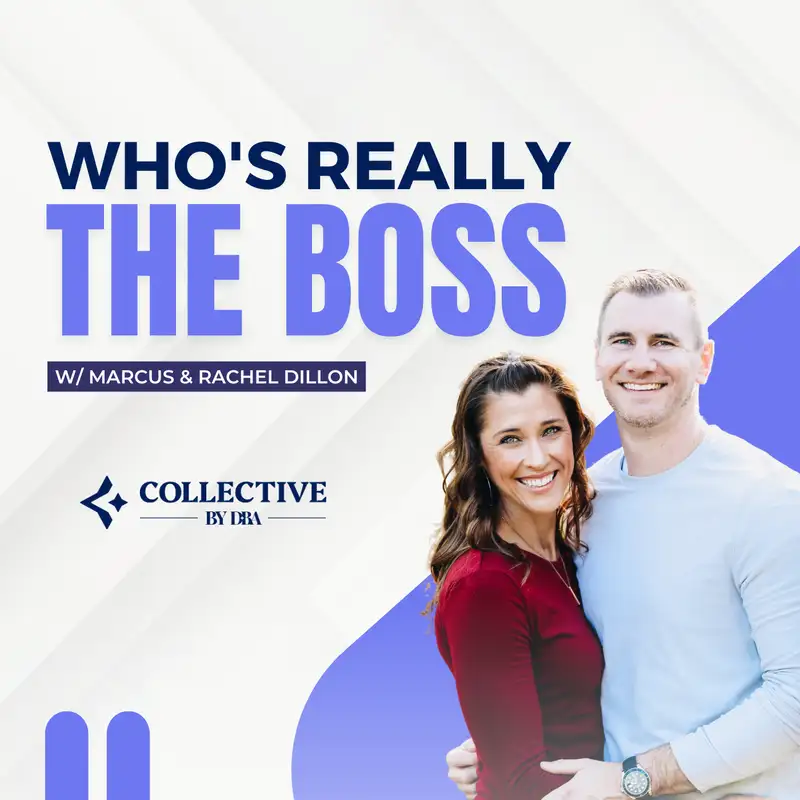
Rachel Dillon: Welcome to Who's Really the Boss podcast. I'm Rachel Dillon, and along with my husband, Marcus Dillon, we share the joys and challenges of leading a $3 million accounting firm together. From team structure to growth strategies, we share our leadership successes and failures so you can avoid the mistakes we have made and grow a valuable accounting firm. Welcome back to another [00:00:30] episode of Who's Really the Boss podcast. Marcus is out of town for this episode, but I am honored to welcome a very special guest, Nick Liguori. Welcome, Nick.
Nick Liguori: Hey, Rachel. Thanks for having me.
Rachel Dillon: Nick. We, um, have gotten to know each other within collective by DBA, but also, I believe we probably first got to know each other through. Maybe LinkedIn was maybe the first introduction. Um, but will you tell listeners a little bit about [00:01:00] you to get us started.
Nick Liguori: Sure, yeah. Um, so I have an accounting firm, uh, up in New Hampshire. We've actually just switched off to being fully remote. Um, but we're we're based up in New Hampshire. Um, and I'm a CPA licensed in the state. I have a wife and four kids ranging from 10 to 4. Um, so busy household, uh, busy with the business and growing the firm. Uh, and our firm is, uh, we have seven employees [00:01:30] right now. Um, and we're a little bit under a million in annual revenue. Uh, and what's a little unique about us is we have a niche in the medical esthetics or medspa industry. Um, and I started my firm about five years ago.
Rachel Dillon: Awesome. Thank you for that context. Before we get too far, we like to ask all of our guests what is the best piece of advice you've ever received? So will you share the best piece of advice you've ever received?
Nick Liguori: Sure. Yeah, I had [00:02:00] to rack my brain for this one, and I've been thinking about it for a little while now, and I. What the piece of advice is. Measure twice, cut once. So that was a piece of advice I received from my dad back when I was in high school. Um, he owned a family business where they made conveyor belts. Um, and so in high school, during the summers, I worked in the belt shop there and made conveyor belts. And, you know, the big thing was, before you cut anything, measure twice. [00:02:30] And I think that's, uh, you know, applies to anything like where you're actually doing, creating something manually. But also, I think it's been influential to me as like making decisions in business. Um, and, you know, I think I'm, uh, try to be, you know, a thorough person as far as thinking through things from multiple angles before making a decision, trying not to make hasty Decisions and things like that. So that would be my piece of advice.
Rachel Dillon: I love that, I love [00:03:00] how you kind of brought it around for even as a business owner or an accounting firm owner, um, it kind of reminds me of like the measure twice where you wouldn't be doing that manually, but maybe getting a second opinion or a couple of opinions before you pull the trigger on something new. Um, so yeah.
Nick Liguori: Yeah, I think it applies in a lot of ways as an accountant. I mean, it doesn't necessarily directly, you know, the way you think of it, but exactly like you said, whether it's researching a topic of some sort, something [00:03:30] technical, or also just from a business owner standpoint about, you know, making those big decisions in your business, making sure you have things lined up, you know? So for me, that was something that kind of came to mind as I thought about that question. Um, that was applicable in a lot of different ways.
Rachel Dillon: I partially thought you might give parenting advice. Um, are you are you waiting until the kids are older before you start doling that out?
Nick Liguori: Yeah. No, I feel like we still got a long way to go before we start giving advice out.
Rachel Dillon: I know things change. Things change rapidly, [00:04:00] right? They do. You never know.
Nick Liguori: Yeah, I know, that's for sure.
Rachel Dillon: That's awesome. Well, you mentioned as you were kind of doing your intro, that you have a niche in the med spa space. So I want to spend some time kind of learning about that, how your firm got started and then how you kind of found that niche or decided on. That's what it would be.
Nick Liguori: Sure. Yeah. I'll start with how we started out and really, um, how [00:04:30] it how it started was I had started my career in public accounting at a mid-size regional firm in the area. Um, after that went to a smaller firm that worked with a lot of small businesses, which I really enjoyed. And after a while there, I decided to go to industry and spent a few years in a financial reporting group for a publicly traded company, in New Hampshire on the seacoast, and during that time I started taking on some clients on the side doing tax [00:05:00] work and some accounting bookkeeping type of work. And after a little while of doing that, it was sort of got to this point where I couldn't balance both things anymore and made the decision to to go out on my own and, and give it a shot, starting my own firm. So, um, that was right at the beginning of 2020. Great timing. With the pandemic about to set in, um, you know, in some ways it was good because I was setting everything up virtually in remote. Anyways, um, [00:05:30] so, you know, Covid obviously forced that on everybody.
Nick Liguori: So in some ways I got a little bit of a head start with that. And then really, I didn't hire my first employee for a little over a year. Um, and I got into the med spa space a couple years in where I had a referral to a local med spa and it was just a really good fit as far as the services we were providing, just the outsource accounting, tax advisory work, uh, with what they needed. [00:06:00] And a lot of the med spa owners that we work with are obviously medical professionals. That's their area of expertise. But, you know, they're not necessarily financially minded or that's not their strength. So we could provide a lot of value there, um, helping them navigate the financial aspect of their business. So, uh, that first client led to some referrals. And, you know, we got involved locally with an association. Um, and really, that's sort of was the first stepping stones [00:06:30] into taking it to a much bigger, um, bigger audience or, you know, more med spas across the country.
Rachel Dillon: Yeah. I think that that is common of how people kind of find a niche for their firm in that they have a really great client that they enjoy working with that is, you know, profitable and lucrative. And on both sides. Right. Like the client is receiving a lot [00:07:00] of value. The firm is receiving a lot of value. And then you just think in your mind, how can we duplicate this and then replicate it over and over and over again? Um, so I think that that's really awesome.
Nick Liguori: Exactly. Yeah. I mean, that's that's exactly it. It was a great fit from from all angles. And, you know, they're profitable businesses. They need help managing their money and making sure they're the tax side of things is being optimized. So it's been a great fit. And um, it's led to a lot of opportunities. And we've [00:07:30] we've made the decision a couple of years ago to really focus in, in this industry with Med Spa, which has been great. I think it's been you know, it helps when you have that focus in your firm, like you have that ideal client, you have that profile that you're looking for. It makes it easier to say no to the clients that are not ideal and a lot easier to identify clients that are going to be a good fit.
Rachel Dillon: I think a lot of people hesitate on, I'll say, marketing to a niche or deciding on [00:08:00] a niche. Tell me a little bit about that experience, because you didn't only work with med spas from day one. So what has been your experience as you have leaned in more to the med spas space?
Nick Liguori: Yeah, it's it's good. You know, it has pros and cons, I think. Um, the upside is you become, you know, you know, you have the opportunity to become that industry expert. Um, so people who are looking for your services are going to come to you, and it's easier for them to find [00:08:30] you. To your point, like, yes, we had an existing client base that were not all med spas. So it was a little scary to say, okay, now we're only going to focus with med spas, and that's who we're going to be marketing towards and tailoring our service offerings to, you know, and over the past couple of years, we've definitely lost a lot of those clients. I mean, some have just churned out naturally and some just we've let go because they really weren't a good fit for the services we're providing now. So, you know, it's a big change. There's been [00:09:00] a you know, it's two steps forward, one step back sometimes with the client base. But you know, each year when I look back it's like we're a step forward in the right direction where we want to be with our our client mix and with the services we're providing. So we're able to serve, you know, more med spa clients better because we have less of those other clients that don't quite fit anymore. So we're getting closer and closer to where we want to be with that. I think this fall has been interesting, where we have seen a few more of those [00:09:30] legacy clients start to drop off, which is is good and bad, but I think overall good. I think it just creates more capacity for our clients and more opportunitie3s for us to continue to grow.
Rachel Dillon: Yeah. And so with that, the exit or the churn of the legacy clients, how are you replacing or how are you? What what is your marketing tactic, um, in order to attract new ideal clients?
Nick Liguori: Yeah. So we've found [00:10:00] we've tried a lot of things over the last couple of years. Uh, we've found what's been most successful is getting in the industry spaces where the owners are hanging out. So one, like conferences, we've gone to a few conferences over the last couple of years, which have been really good opportunities, um, to network with other professionals in the space, other vendors in the industry. Uh, we've created a lot of referral partnerships that way. So that's been one route, and the other has been podcasts [00:10:30] and webinars that are targeted towards the industry. So we've been doing more and more of those. And and that's been really helpful to, you know, for brand awareness and for those medspa owners who are looking for services to find us because it's, you know, podcasts are already listening to, we're popping up there and then when they need us, we're we're top of mind. So those have been the most successful routes. We've been, um, leaning in a little bit more to social media and, um, [00:11:00] website, you know, online marketing efforts too. So I think that's kind of the next step forward we're going to try and make, um, is optimizing from that side. But I think being in the industry, places where the clients are hanging out is the the best piece of advice on that end.
Rachel Dillon: Thinking back to like your first conference that you went to or maybe the first podcast, whichever kind of came first, how did you how did you make that connection? Did you pay for a booth [00:11:30] space? Did you apply to be a speaker? Were you invited in? How did that kind of start for you?
Nick Liguori: Yeah, the first one we, um, we paid for a booth, and we're just present there and met people and made connections. I think the second one, we were invited, it was a smaller conference and we were invited to have a speaking spot, so which is great. And then really it's just sort of evolved from there. And we just try and keep those connections going, like make sure we're reaching out to the industry partners as much as we can. [00:12:00] Um, throughout the year when we're not at conferences and things like that, we've only done a couple per year. Um, but they they have proven to be pretty beneficial. I mean, you probably know or anyone who's done conferences like that, like, booths can be pricey. So it's like you want to see some bang for your buck for that. Um, but so far for us, they've been worthwhile.
Rachel Dillon: What is if you if you don't mind sharing or if, you know, kind of what's the range that you've spent on having a booth at a conference?
Nick Liguori: Yeah, I think [00:12:30] the range is probably what we've done so far is 3 to 5000 per conference, per booth. Um, we were looking at a few, though, that are upwards of like 5 to 10. So I mean, there's the there's a pretty big range there, but usually around 5000 is a typical typical one I think so.
Rachel Dillon: And do you have any direct new clients that you have picked up from those conferences?
Nick Liguori: Yeah, I'm thinking specifically the one we did last November. We came away [00:13:00] with 2 or 3 new clients. So when you think about it from an ROI standpoint, if you're getting a monthly client for, you know, an event that costs you $5,000, it pays for itself, for sure. So as long as you're walking away with one new client from my from my point of view, it's it's worthwhile. Plus the other, you know, the presence, just being there, people seeing you, um, and the other connection. So it's a little bit of, you know, getting into it for the first time was a little bit scary because it's a big investment, of course, but it's it's paid off. [00:13:30]
Rachel Dillon: Yeah, absolutely. Um, I know that you do that very well. So thank you for sharing. I think some of us don't know what it would be like to go into an industry conference that's not our own industry, right? So if we have a dental niche or a veterinary niche or whatever construction, whatever that might be, what does it look like to go in? Um, always, always better if you can have some sort of speaking part [00:14:00] within that just so you get a little bit of extra highlight? Um, because depending on the size of the conference, sometimes it can feel like you're lost in just a sea of other booths for sure.
Nick Liguori: And that's actually what we're planning to try and do for the next year as we're planning them out, is trying to get on stage at the conferences or in front of a group of some sort at these events, because I think that's where you get the most exposure and probably the best opportunities, you know, versus a booth, because people can come [00:14:30] and go. And depending on where you're set up in the conference center, like you may not get great activity. So, um, so yeah.
Rachel Dillon: Yeah, I think another great, um, entry point that's maybe on a much, much smaller scale, but kind of local study groups or meetups or associations. Those are also a great place where they have some kind of monthly or quarterly meeting is kind of making an introduction. Have you guys had the opportunity to do that, or is it not as concentrated [00:15:00] in your area?
Nick Liguori: We there is a New Hampshire Association, um, for med spas as well. So we've been involved with that. Um, and that only started a few years ago. So actually we've worked with them from the beginning. So that's been good too. It is a smaller group and they have they don't have a ton of, you know, events necessarily, but we are present at those two. And that's a good way. Right. A much lower cost to entry when it's local where you, you know, maybe it's a half an hour drive versus flying somewhere across the country to, [00:15:30] to show up for an event. So that's a great way to start.
Rachel Dillon: Yeah, absolutely. Well, your efforts, um, have been lucrative. And your firm is growing. Therefore, your team is also growing. So let's talk a little bit about that. Let's talk through what services you offer to the med spa. If you have those in any kind of package or a la carte. Um, and then let's talk through how how you provide those services. So how you structure your [00:16:00] team.
Nick Liguori: Sure. Yeah. So we offer three different service tiers. Um, so bronze, silver, gold type packages. So our bronze tier is basically an outsourced bookkeeping service is the main piece of that silver. We package the bookkeeping plus tax planning and um, fractional CFO support on a quarterly basis. And then our gold tier is basically that same package just on a monthly basis. Um, so just more high touch, um, more support [00:16:30] on that regard. So, um, we've had that structure for a couple of years now, probably three years where we've been offering those package services with slight tweaks and adjustments here and there, which has has worked out really well. Most of our clients fall into that silver tier. That's where we have the most interest, especially with med spas, because that tax planning piece is is really beneficial. And I think that's where they see a lot of value in what we do outside of just, you know, anyone else that they could work with. Um, so [00:17:00] so that's been really good for us. And then from the team standpoint, we've been we've made the switch, uh, to the team of three structure, uh, which has been great.
Nick Liguori: I think it's given a lot of, you know, structure to our processes, for one, um, and the roles like, there's no there's very clear responsibilities with that structure. You know, everyone knows what they're responsible for, for the clients we're working on. Uh, and it's allowed me to also delegate a lot [00:17:30] easier. Um, So that was the big thing with implementing the team three was having people to delegate to and knowing, you know, feeling confident that I can do that because we have processes in place to to manage the clients. So that's been good. We have almost a full pod. So we have a team we have right now we have three bookkeepers to managers and myself as the CFO in our pod. So we'll probably add another bookkeeper in the next year to sort of fill that out. So [00:18:00] so it's worked well. It's been a great shift, I think, for us. And I think it's, you know, from a scaling standpoint, it gives us a lot of it gives me a lot of confidence that we have the structure in place to continue to grow. Um, so that's been good.
Rachel Dillon: Yeah. I love that you know exactly what position you need to fill next, assuming no changes with the current team, right? Assuming just growth, no changes with current team you already know and are planning for. [00:18:30] Okay. These team members are at whatever capacity. And when they hit here, that's when we need to start looking for that next person and then have them come on. And that really was the clarity that doing the team of three gave to us as well. The delegation and then kind of the hiring roadmap of knowing exactly what position I need. Not that I need to duplicate insert team member's name, right, because we're never going to find that exact same person in [00:19:00] another candidate. And so being able to kind of structure those each role and have defined responsibilities. So that way we can see like where is the bottleneck going to be if we add one more client, if we add six more clients, like what position is going to be tapped out. And that's the one that we need to go find, right?
Nick Liguori: Yeah. And that's the other nice thing about having the industry focus too, is you know, how much Each time each new client is going to take [00:19:30] up where it's very similar client to client. You know, relatively speaking, it's a lot easier to plan capacity that way versus if you're in all different industries and every client is different, it's so much harder to determine when you're going to need to make that next hire. Um, so that's been really helpful from that side too.
Rachel Dillon: Yeah. Have you guys, um, since you've transitioned to a team of three, have you guys hired a new position since then? Have you hired someone in now that you have those roles and responsibilities defined?
Nick Liguori: Yeah. [00:20:00] We did. We, um, we've hired at that accountant role level. So the the CSM level. Mhm. Um, so yeah. And we, I was originally going to hire a manager level person over the summer. Um, but just with things shifting, uh, I ended up not doing that. And we promoted someone within just recently into that role. So that's sort of why that fourth CSM role is going to be opened up at some point this next year is we're moving someone into that second manager spot or [00:20:30] controller spot. So um, so yeah, but it is very helpful to have those roles clearly defined when we're hiring. I mean, when we search, we were searching for the manager externally. We had a very good picture of what we needed and who we were looking for. So that's that's been really helpful.
Rachel Dillon: I think it makes it helpful on both sides. Right. The candidate knows exactly what they're signing up for, at least on paper. Like at least they think they know. And you know exactly what skills and qualifications you're looking for. [00:21:00] Um, within that person. I also want to ask training because to twofold because your niche specific um, in the accounting and maybe even chart of accounts look very similar from client to client. Was it faster or did it feel easier to train that new person coming into that position?
Nick Liguori: Yeah, I think so. I mean, training is a little bit of a challenge, just I think because of our size, where it's like we don't have this robust training [00:21:30] protocol to run everyone through when when someone new starts. But yeah, the industry makes it a lot easier because, you know, you know, you worked on this client. Now this client is going to be very similar in their how things are structured and the things you need to be watching out for. Um, I think that's the biggest thing is like once you've learned a few med spa clients, now you sort of know where the potential issues lie and where the challenges are going to be. So you can plan for that. And then like on the onboarding side, for new clients, [00:22:00] it's the same thing like our when our team is onboarding a client, like we know where the problems are going to lie. It's probably going to be inventory. It's going to be, you know, are their sales broken out properly? Are there is there equipment broken out on the balance sheet. Like so those things are easy. We know where they're where the problems are going to be. So it makes that process a lot smoother too.
Rachel Dillon: Yeah absolutely. And I'll just share. Um, as we've been doing this, you know, a while, our best training is still shadowing [00:22:30] somebody, which requires time, right? And when people are limited on capacity or availability. But I think no matter how big you get, shadowing is always great. And then we just always try to record. Right. Screen record when we're doing that so that they can just go back to that again and again and again, and they don't have to shadow for a full month. They can shadow a few. Where that is harder is if you have all different industries that you're trying to teach to [00:23:00] one person who's brand new, um, that's where it gets harder and where that niche really comes in handy. Um, we're kind of helping that process along. Yeah. Should never say training is easy or seamless. Um, just maybe a little bit easier than it possibly could be. For sure.
Nick Liguori: For sure. Yeah. And we've been using keeper now for a little over a year too. So we've been sort of building that out as far as our notes for each specific client and the, [00:23:30] the, you know, whatever unique processes or steps there are for month end or for payroll and things like that. So, um, that's been a great tool for us to and with anything, it's always a little bit of a learning curve when you start with a new system like that. But it's been great. I think now that we've all gotten into the swing of it. Um, that's been really helpful too.
Rachel Dillon: Before you used keeper, what did you what did you guys use for that part of the business?
Nick Liguori: Yeah. So we had tried a few different things. Uh, right before keeper, we were just using QuickBooks, [00:24:00] um, to sort of track the specific tasks for each client. And then, you know, um, I'm trying to even think we were using Trello, actually. So we had sort of built our own sort of workflow, um, within Trello. And then in combination with QuickBooks, we were we were managing it, which was was messy for sure, which is why we were looking for a solution like keeper that sort of brought everything all together. Um, yeah. And when we did that, we were definitely at that sort of tipping point where we needed a lot more structure in place, [00:24:30] just size wise, uh, where we had grown number of clients and number of team members. Um, so, yeah.
Rachel Dillon: What were some of the things and keeper not to not to keep going. We use keeper as well. Um, and our team loves it. It solved a lot of pain points for us and things that we're getting kind of lost in translation if there was change within the service team. Um, but what were some of the things that keeper solved for you guys?
Nick Liguori: Um, I think the biggest thing [00:25:00] well, one of the biggest things was consolidating probably 4 or 5 different apps that we were using into one. So that was one one spot where it was great. So we were using Ncat previously. Um, so that was one system we were using Sharefile for our portal. Till then, we're using Trello and QBO for like the workflow. So just those things alone, I feel like there was one other thing we were pulling in or eliminated with keeper, but you know, that's basically for that were replaced with one, um, [00:25:30] one process, one system. So that was that was great. That was the big thing. And then the integration with QuickBooks online has been really awesome too. For me, that's the the highlight of keeper. Um, just that integration and that ease of making edits from one system. And on the reviewer end of things, I really like the capabilities of keeper to be able to go through the balance sheet, the different reports in there. So that's why I think those are the big selling points for us.
Rachel Dillon: Yeah, we love tech. [00:26:00] We love all of all of the solutions that are out there. But it is hard when a new team member comes on and you are trying to introduce them to 4 or 5 different things. Um, yeah. So when there is a great solution with great support. Um, like technical support, like with keeper. Uh, it it's a, it's a no brainer of like, okay, we need to do this because we can't take the extra time to help people [00:26:30] learn all of these apps, then learn the process, then serve the client. We need to streamline that in some way. Also cost, but more. So it's the time, right? Like it's the time and effort and the overwhelm that a new person has when they come into a situation and have, you know, up to 30 to 40 apps that they're trying to learn, um, within a new company. And so we, you know, not too, too long ago, we asked, um, within collected by DBA how many [00:27:00] technologies and softwares people were using. And I believe average was somewhere around 30. Um, and so that's a lot.
Nick Liguori: I know you start to count. It adds up quick.
Rachel Dillon: Yes, absolutely. Okay. Well, you mentioned that you guys are nearing a million in revenue. So tell me, what do next steps look like? What do goals or what is your future look like?
Nick Liguori: Yeah. Um, you know, to be honest, that we were aiming for a million when we started [00:27:30] this year. And, you know, we had a lot of shifting pieces, um, some team members moving on, some clients moving on, like bigger clients that were outside of the industry that left. So we've this year has been almost a like a regrouping year in a lot of ways. Um, so we've spent a lot of effort on building the team, um, getting our processes down really well, uh, streamlining onboarding. So we've reduced our onboarding time significantly from where it was a year ago. [00:28:00] Um, so right now it's really we've set ourselves up. We're doing our best to set ourselves up for that next phase of growth, to kind of push beyond A million in annual revenue. So really, it's kind of marching forward from where we are focusing on the med spa clients and bringing in more clients. Um, you know, we have a few lined up before the end of the year and then, you know, next year we'll plan to continue to to add more clients and then continue to build the team out. So, you know, it's it's a little bit of a regrouping [00:28:30] time right now that we've had over the past few months and maybe the last couple of quarters, but I think we're in a better position than we were a year ago. And I think we're setting ourselves up to for that next step forward with growth, and we'll see where it goes from there. I mean, um, you know, having the full pod will be exciting to get to that point where we are ready to bring on that fourth, um, accountant role. Um, and, and we'll see. Hopefully the growth continues, how it has been and [00:29:00] we'll keep pushing forward.
Rachel Dillon: I know that every ear listening perked up when you said you were able to decrease your client onboarding time.
Nick Liguori: Um.
Rachel Dillon: So will you just spend a couple of minutes talking about, you know, kind of what what time frame did that process used to be? And what is it now and then we can go through maybe what were some, uh, factors that helped to decrease that time?
Nick Liguori: Yeah, it's it's it's [00:29:30] evolved, of course. And I mean, originally there was really no timeline on it. It would be sort of as it happened. Um, and then we put into place like a 60 day onboarding period. And part of that was just due to capacity constraints. And part of that was just trying to figure out the process. So, um, since then, you know, the the big change that's happened since then is we've nailed down that onboarding process. We've leveraged keeper as far as building out like onboarding template in there. And, [00:30:00] you know, we send a checklist to the client so they can do their end of it. Right at the beginning of onboarding, we have meetings set up on a schedule so we can keep moving them forward and getting the access we need, and then we're just assigning our team members internally onto that sooner than we were before. So they can get into the details and into the weeds a little bit and make sure things are in place. So we've cut that down to a 30 day onboarding cycle now, which is great. I think that's, [00:30:30] you know, for our size and how much we can reasonably take on at one time, that lines us up really well, where we can at most take on two clients at a time. Um, so if we're doing two clients and that's at a 30 day each, we can start a client each month or two clients each month, you know, during the non-busy times. So that's been the big shift. We've that's really fairly new for us the 30 days. But it's been going well so far. And I think it's a [00:31:00] step in the right direction. Ideally I'd like it to be a little quicker, but I think, you know, for for where we're at, it's a good step.
Rachel Dillon: Um, with that, you mentioned meetings, like meetings throughout the process. Are those internal or are those with the client?
Nick Liguori: Yeah. So mostly we do have sort of ad hoc internal meetings. A lot of it is just like through teams, um, as we're sort of navigating of what we need and what information needs to happen, uh, or we need to gather, but then we have we have at least three [00:31:30] meetings with our clients during the onboarding phase. We'll have an initial meeting that's like, all right, here's the how this is going to run. Here's the list of information we're going to need. And you know this is sort of the outline of the process. We'll have then a couple check in points throughout that month. And then we'll also have like an introductory CFO meeting where once we've sort of gotten a handle on their financials a little bit, we'll go through the numbers with them and also sort of discuss what their goals are, where, [00:32:00] what they're hoping to gain from working with us in that capacity so we can sort of start to plan out what we're going to do from the advisory side of things as well.
Rachel Dillon: I love that I think that that probably has helped with that significant decrease, just in that it's an extra layer of accountability. They can't really disappear on you. Um, and stop responding to requests.
Nick Liguori: So exactly. Yeah. And we always try and schedule that next meeting before the end of the, the meeting [00:32:30] we're having with the client. So it's on the books. They know it's there. They've committed to a time that works in their schedule. So it helps. I mean, that structure has been the biggest thing is just having that process internally and then, you know, working with the clients too and letting setting the expectation up front that, like, this isn't something we can do without you. You know, you need to provide us access, provide us information for us to do our job and ultimately, obviously take a lot of the burden off your plate. But if we don't do that upfront, it makes it a lot harder. [00:33:00]
Rachel Dillon: Yeah. I mean, there's so many times I think the client has good intentions and then they get a list, and there's something in that list that they don't know what it is, or they don't know where it is or how to do it. And they think, I'll just do it later. I don't know how to do that. And then they completely forget. And then, you know, potentially our teams think, well, I've asked them, I don't want to bother them again. I've told them they have it in writing. I sent a reminder. Um, but yeah, having those [00:33:30] meetings where they can kind of see you face to face or, you know, virtually or in person wouldn't matter either way. Um, but where they can kind of get that assistance or support, ask that follow up question of like, I'm not really sure what you mean by this, or where would I find that if I no longer have it right?
Nick Liguori: Yeah. And it's always there's always a bank or credit card that getting the access is an extra challenge. And it's like how, you know, it's tedious and challenging at times, but sometimes [00:34:00] just doing that with the client on a call is the best way to get it done, because otherwise it's going to be that thing that they're just like, I'll do that later and it's not a priority. So sitting there and having that that time to to get it done is important.
Rachel Dillon: Yeah, absolutely. All right. So you have built and are growing an amazing firm. But if you were starting over again today from scratch, is there anything you would do differently.
Nick Liguori: Yeah, I [00:34:30] think um, there definitely is. I think I started my firm without a big picture plan in mind. Um, I was sort of, of the mindset of I was going into tax season when I left my full time job. I figured if I can add a few more clients and build it up a little bit, that would work fine and that would be great. I'd hopefully make enough money to pay the mortgage and, you know, make ends meet. Um, but I wish I had done it more intentionally, like set things up, set up processes, set up our service offerings [00:35:00] at the beginning before starting, rather than sort of trying to figure it out on the fly. Um, and then the next biggest thing would be pricing. I think we really didn't get our pricing to a place that was was solid for probably a couple of years. Um, and that's been a big, big thing is knowing the value you're providing. And, you know, being confident as you're selling that was a was a big thing for me. So those would be the two things if I could start over. Having those set to go before [00:35:30] even opening the doors would have been my the biggest thing I would change.
Rachel Dillon: What was the evolution of pricing from when you started to where it is now?
Nick Liguori: Oh gosh. I mean, I think my original packages were, you know, $200 a month for bookkeeping and, you know, 500 for CFO support or something like that on top of it. So they were significantly lower. I think right now our our basic packages are about [00:36:00] 800 for the bookkeeping, 1200 1500 range, depending on the size of the client for our, uh, middle tier silver package and then 2000 plus for our our gold tier. So and it depends a little bit on the size of the client, but that's sort of the range that they're in. So it's, it's changed significantly. Um, some of those clients, you know, you also avoid some of the clients that are just price shopping and really don't value what you're doing by having the pricing right, too. So [00:36:30] so yeah, it's changed a lot.
Rachel Dillon: And do you guys charge an onboarding fee or implementation fee up front?
Nick Liguori: We do. Yep. So we've um that's something we've ramped up over time as well. So right now we're charging um, 3000 for our bronze tier which doesn't include CFO or tax planning. And then we're at 5000 for the onboarding for the silver or gold tier. Um, and.
Rachel Dillon: Do you get any pushback from prospects on that or on your monthly [00:37:00] prices.
Nick Liguori: Um, we've had a little pushback occasionally on it. Uh, I think with the onboarding, we've that's a spot where we have I think this is advice you guys gave at some point. Um, we have discounted the onboarding price a little bit. Um, you know, if that's been a barrier for folks that's otherwise would be a good fit. The other thing we've done is just spread out that onboarding fee. So like split it into 2 or 3 payments to make it a little bit easier for, for the clients to manage as they're [00:37:30] getting started. But no, I mean, I think if anything, it almost helps support the monthly price in a way. I don't know if that makes sense, but that's sort of how I felt about it a little bit as we've ramped that up.
Rachel Dillon: Yeah, I think people are just used to anytime they change over to anything, that there's some type of cost for the administration, the setup, whatever it might be. So I think people are almost expecting that, Yeah, like you said, it's a great lever to pull to close the [00:38:00] deal. But also great if it really deserves and needs every bit of that budget for onboarding, spreading that out over a couple of times rather than just discounting it, is such a great strategy. Such a great strategy, so that the team, you know, like everybody's compensated for the time that's actually going to go into this and the relationship starts off on a great foot.
Nick Liguori: Yeah. For sure. Um, yeah. So that's been great. The other thing we've done is started to schedule clients. Like we've only opened up like two [00:38:30] slots for per month. Um, so if someone is signed and they're a month or two out, we've done like a portion as a deposit basically of their onboarding fee and then paid the rest of it as we start the onboarding process. So that's been another way that's helped, you know, keep clients committed if we're a month or two out for them, but also break up that cost a little bit.
Rachel Dillon: Yeah, absolutely. Well we have mentioned collected by DBA a couple of times during this conversation, and you actually work [00:39:00] with collected by DBA. Um, part of the community and also with an advisor. Is there anything you'd like to share, kind of about the benefits of working with them, or what that relationship has meant for you or the firm?
Nick Liguori: Yeah, that's been great. I mean, for me, working one on one with an advisor has been really beneficial for me trying to navigate the changes the firm's gone through over the last couple quarters. So just, you know, having that sounding board and someone who is obviously has seeing [00:39:30] a lot of different firms at a lot of different stages, uh, has been really good perspective to have and has given me the confidence to make, you know, that I'm making the right decisions or making decisions that make sense, um, for our goals and where we want to be going. And a lot of good, you know, push and encouragement as well to kind of make take those steps that are challenging. Managing. So the accountability piece is important to for me. And I think for any small business owner, it's easy to feel a little bit isolated, [00:40:00] especially with these bigger picture decisions that are happening. Um, so to have that support was really great. And then the community as a whole too has been awesome. Just the resources there. We've taken advantage of a lot of those, you know, the CPE and all the other stuff that that you guys offer has been great. So I personally have used it a lot. The team as a whole, we've benefited from it and used a lot of resources. So it's been it's been really good.
Rachel Dillon: That's awesome. Well, thank you for sharing that. I know, um, for all of us, sometimes it's hearing [00:40:30] like other people are asking for an onboarding fee and it's going just fine. Right? Like it's covering it's not just extra money to put in your pocket. It is actually going towards the effort that it takes to get, you know, accounting cleaned up and tax returns, um, performed in the program and all of the things that need to happen right at the beginning of a new client relationship. And so sometimes it's just nice to hear what other [00:41:00] people are charging for this. Or wait, my prices are, you know, 500 or $600 a month less than what other people are charging for the exact same work. You know, it's not they're not doing it differently than I am. So why am I not, you know, valuing our team and our time, um, in a different way. So I know that that really is helpful. Um, if nothing else, just to hear other people are doing it. You can do it too.
Nick Liguori: Exactly. Yeah. Right. No, it's a great perspective to have. [00:41:30]
Rachel Dillon: Well, um, I just want to say thank you so much for coming on and sharing. I think you have figured out a ton of things, um, in just a short, relatively short amount of time, niching down to one specific industry becoming that expert in the industry, um, putting your efforts into where it truly matters, and you can see ROI on what you're spending budget on, rather than just sometimes it [00:42:00] feels like we're just throwing money in a marketing direction, hoping that it might help. But thank you. I think you've shared a lot that people can learn from today.
Nick Liguori: Yeah, I appreciate you having me on. It's been great to chat and, um, yeah, hopefully it's some helpful information for folks and and yeah, it's been great to great to have the conversation.
Rachel Dillon: All right. Well thank you so much.
Nick Liguori: Thank you Rachel.
Rachel Dillon: Thanks for listening to this episode. If you enjoyed the conversation and want [00:42:30] to learn more, be sure to visit. You can schedule a meeting directly with me, Rachel by clicking on the Contact Us page. Be sure to subscribe, like, and share so you don't miss any future episodes. We look forward to connecting with you soon!
Creators and Guests